
 EN
 ES
 FR
 PT
 IT
 PL
 DE
 TL
 USD $
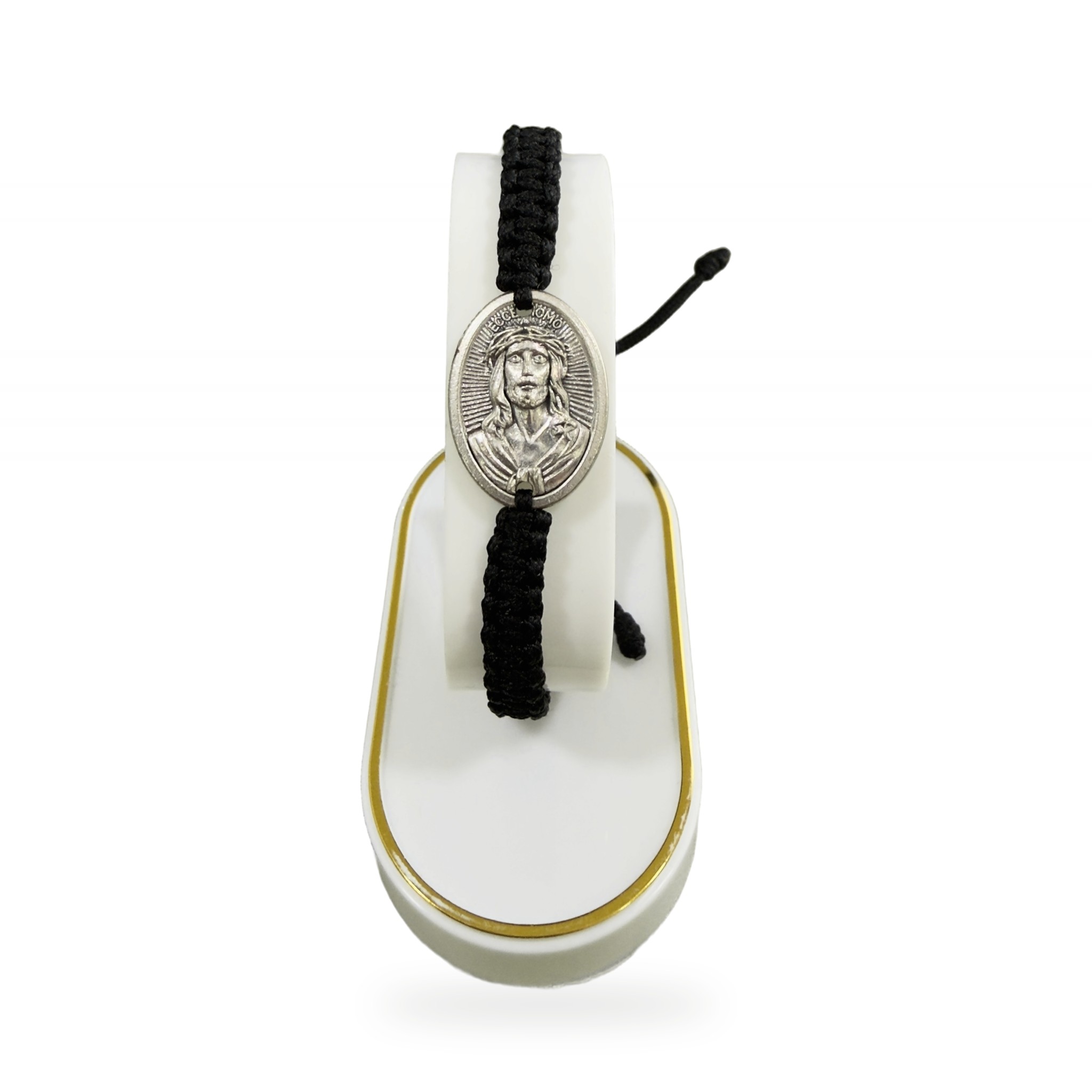
Ecce Homo Medal Bracelet
Two Latin words, spoken by a Roman governor who did not know what he was saying. Ecce Homo — “Behold the man” — is what Pontius Pilate called out when he brought Jesus before the crowd, scourged and wearing a crown of thorns. For Christians it became one of the most searching images of the Passion, and this bracelet carries it.
Ecce Homo: meaning and source
The scene is in the Gospel of John (19:5): “So Jesus came out, wearing the crown of thorns and the purple robe. Pilate said to them, ‘Behold the man!'” From the late Middle Ages onward, painters and sculptors returned to that single moment — Christ alone, mocked, silent — and the faithful prayed before it, especially in Lent. An arch on the Via Dolorosa in Jerusalem still bears the name.
Why people wear this image
| Worn | With what intention |
|---|---|
| During Lent and Holy Week | To stay close to the Passion day by day |
| In illness or humiliation | He was mocked and did not answer back |
| By members of Passion confraternities | Processions in Spain, Italy, Latin America and the Philippines |
| As a simple sign of belonging to Christ | A man’s bracelet that is plainly Christian without being ornate |
Details of the piece
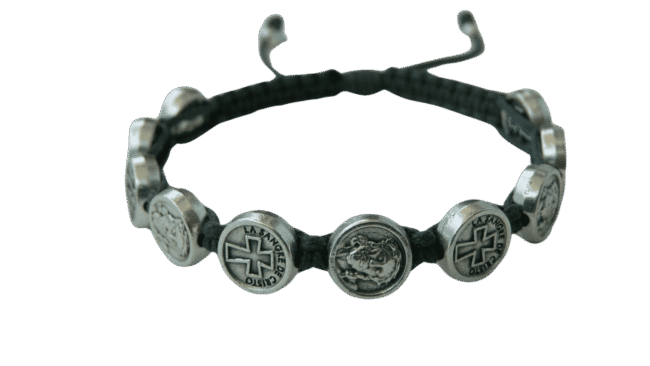
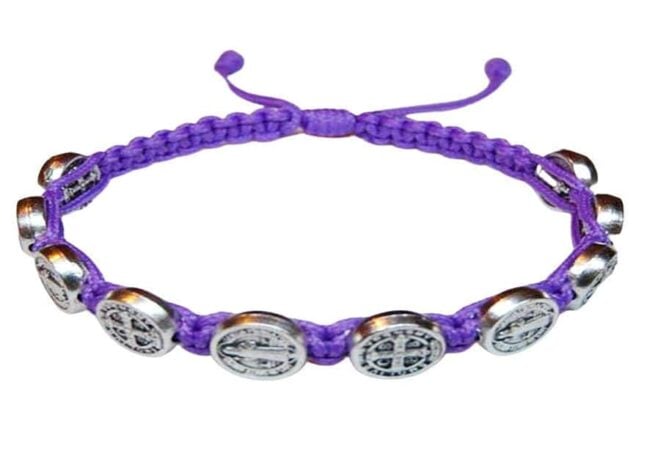
The oval medal is cast in Italy with the head of Christ crowned with thorns in relief, then given a silver-tone finish. Each one is woven into a cord in our Bileća workshop in Bosnia and Herzegovina and tied off with a sliding knot. Packs hold ten bracelets.
Related devotion
Customers drawn to the suffering face of Christ often ask for the Holy Face as well; it has its own piece, the Holy Face of Jesus bracelet.
A prayer before the image:
Lord Jesus, crowned with thorns for love of us, have mercy on us. Teach us to recognize you in everyone who is despised.
Ecce Homo: two questions
What does Ecce Homo mean?
It is Latin for “Behold the man,” Pilate’s words in John 19:5 as he presented the scourged Christ to the people.
Is a crown of thorns bracelet only for Lent?
No. Many people wear it all year as a reminder of what Christ bore, though it sells most between Ash Wednesday and Good Friday.






Reviews
There are no reviews yet.